


***

It was mostly good, but there are some things to nitpick.
In the future, the real world sucks, so most people spend their time in virtual reality. The creator of this world (a year or two older than I) grew up in the 80s, and when he dies, he leaves his fortune to whoever can find the “easter egg” he’s hidden in the world. This results in a big resurgence of 80s culture. There is a lot of 80s nostalgia here, which is fun, but some references are to things after the 80s.
At times, there were major info-dumps—the author went on and on, describing various aspects of the virtual world or how old games work. Sometimes these things were described more than once, and a lot of it was unnecessary to the plot. It felt like the writer felt compelled to include ALL his notes on his world.
The characters were mostly good, and it was nice to see Wade make friends instead of being made to suffer completely alone. (The Japanese characters felt more like stereotypical caricatures, but I don’t think the author meant any offense.) I also couldn’t believe that human beings could innovate and create in the computer industry but couldn’t solve any problems in energy and other technology fields. That broke my suspension of disbelief.
The parts of the story that focused on the actual quest were really suspenseful and well plotted. Wil Wheaton brought a lot of enthusiasm to the narration, and I think that helped the story a lot.
***

This book captures the beauty and simplicity of childhood that can never be recaptured. The writing is lyrical and poetic. If that appeals to you, you’ll love it. If it sounds kind of boring, you’ll probably be bored. The plot here is very simple.
It’s sort of an alternate world, I guess. It feels like World War II. A boy is sent to his grandmother’s in the country for the summer. She lives near a forest with a grove of statues and nonsensical engravings that the boy thinks is a puzzle to solve. An enemy soldier is shot down over the forest, and that’s about it for the plot. The fantasy elements in the book are so sparse, I can’t even call it a fantasy.
All the characters and place names are given only an initial: The main character is G——, the neighbor is Mrs. F——, and so on. I believe this is to avoid giving away any nationalities, but it was annoying, and I made up names for everyone.
***

I think this is what’s called magical realism — It has fantasy elements but is really a drama. Rachel has the power to grant wishes, usually involuntarily. When she was little, she wished her little brother out of existence and has been burdened by guilt ever since. She takes off in her car and mysteriously runs out of gas in Nowhere, North Carolina, where the fantastic is usually believed. She’s taken in by Catch, an old woman who helps people keep secrets through baking pies. So we have WISHES and SECRETS.
There’s a romance that feels a little forced, like it’s there as an obligation to the genre. The love interest is going through a divorce, so he’s still married when they’re flirting and kissing. Rachel eventually learns to control and accept her wish-granting powers. Meanwhile there’s tons of coincidences going on, because that’s the kind of place this is.
The end left a lot of loose ends. If it had brought everything together in a solid resolution, it would have left a much more powerful impression as a book. At the end, we’re not totally sure where the romance is headed, [SPOILER ALERT] what the deal is with the brother, why the rotting tree is so bad, if the pies have a connection to wishes now, and what if Lola’s cheating was caused by Ashe’s dad’s charm powers? Doesn’t that change the whole cheating dynamic?
There’s very little swearing, some making out and innuendo, and just a few editing errors.
***

This is a cute novelette. Young girls often have magic until they get too old. Chronos is a mage who tries to avoid the rest of the world but keeps seeing visions of the future in which one magic girl is enforcing world peace at all costs, with disastrous consequences. Now Chronos has to convince this girl to take a different path. Let’s see how that works out. This is the first “episode” of the Magical Mayhem story.
The writing is solid with very few errors; the characters work well; pacing is good. I really don’t have anything to nitpick. I received a free copy for review.
***

I’m in awe of how well done this book is. Where to begin? The story is a multi-layered mystery. Reveals come at the right time to keep the story moving. New aspects of the mystery keep tantalizing the reader. The stakes and danger keep increasing, and there are plenty of little twists along the way. The characters’ bickering and the snarky skull sprinkle the story with humor throughout. The writing is superb.
A lot of times I read stuff and think, Hey, I can write at least as well as this. Not in this case.
***

I’d say this book is about as good as the first, and you could probably skip the first and not feel lost. It’s a fun story, but I feel like it’s not going to stick in my memory well. This book features werewolves, and I had a hard time keeping them all straight. I’m sure this is mostly because I’m getting senile and can only keep track of, like, three characters. But the writing is solid, and there were some good laughs.
This could have been really good with a few tweaks. Harry’s stoicism has the effect of reducing the reader’s emotional investment. There are tense moments, but if Harry is staying calm, the reader stays calm. Also, Harry doesn’t have a lot of personal stakes in the situation. That’s my theory.
***

In this short “episode,” Chronos is stuck with an unwanted houseguest and in desperation turns to her sister, an evil fashion designer who makes super villain costumes. It’s easy to laugh at the desperate situation, treated with a light tone. The writing is solid with a great voice. Even the editing is good. I received a free copy for review.
***

I feel like I’m missing something when it comes to mysteries. I feel like nothing happens until the very end. If you’re a real mystery fan, you’ll probably enjoy this one.
The story starts off with a murder-suicide, but Falk, our main hero, notices a few things that are just a little off and starts looking deeper into the case. For about three-fourths of the book, he’s following very flimsy clues, grasping at straws, until he finally gets the piece of information he needs to figure everything out. I felt like story was meandering aimlessly because the clues were so non-meaningful. But the last quarter of the book, where they hone in on the true killer, was really good and gripping.
Also on the plus side, the dry, drought-ravished landscape is vividly portrayed. The characters are good. It was nice that Falk was able to partner up with the local cop instead of fighting with him the whole time.
It was supposed to be a small town. For me that means fewer than a thousand people. I don’t think this town was that small; they had lots of businesses that I don’t see in small towns. And someone drove a car that nobody recognized? In a real small town, everyone knows what car belongs to whom.
There’s a secondary mystery involving a death from Falk’s teen years that was never satisfactorily solved. At the end, the reader is told how it all went down, but none of the characters know this information. There were also flashbacks involving dead characters and events that could never be discovered by the heroes. That was really weird, for the reader to just be given information that was impossible for the hero to discover.
***

This is a great, concise book on story structure. Although written for screenwriters, any kind of story writer can benefit. (Mostly the advice on pitching will be a bit different.) He goes over key plot elements every story must have to be interesting. If your story is lacking something, there’s a good chance it’s missing one of these elements. The book also shows you how to focus on making your story marketable to agents/publishers/producers. This is definitely full of useful advice. There are a few grammar and punctuation errors.
***

So what is this week’s scary creature?
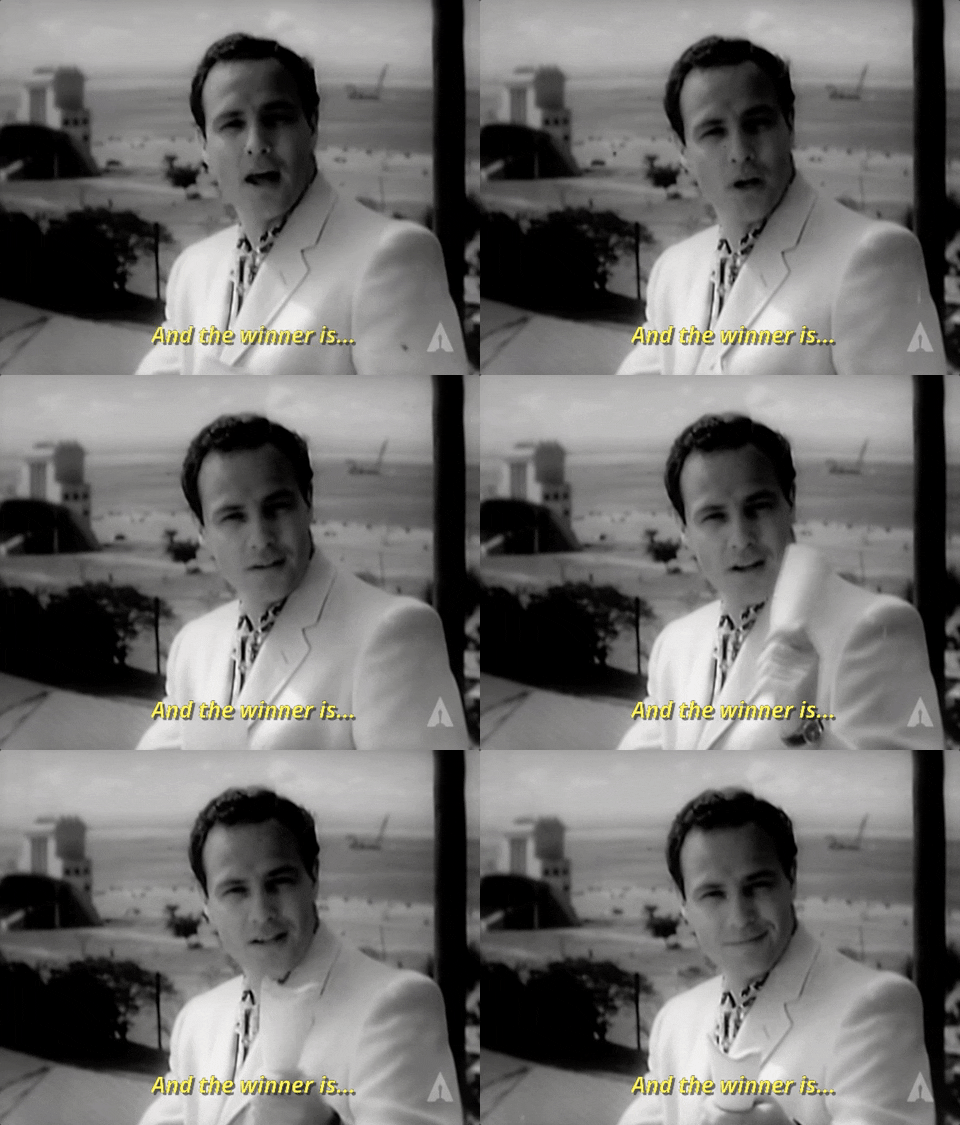
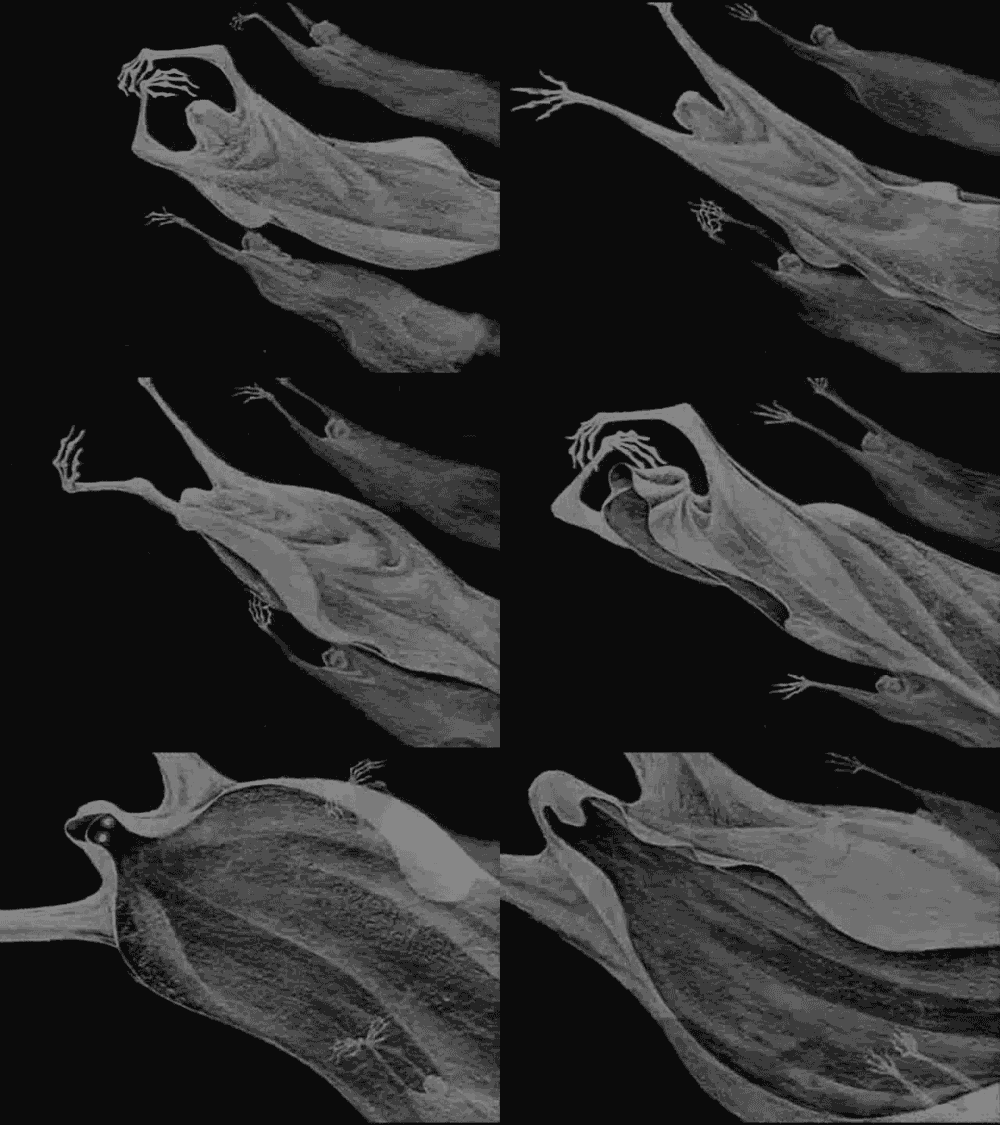
Ghosts!
and
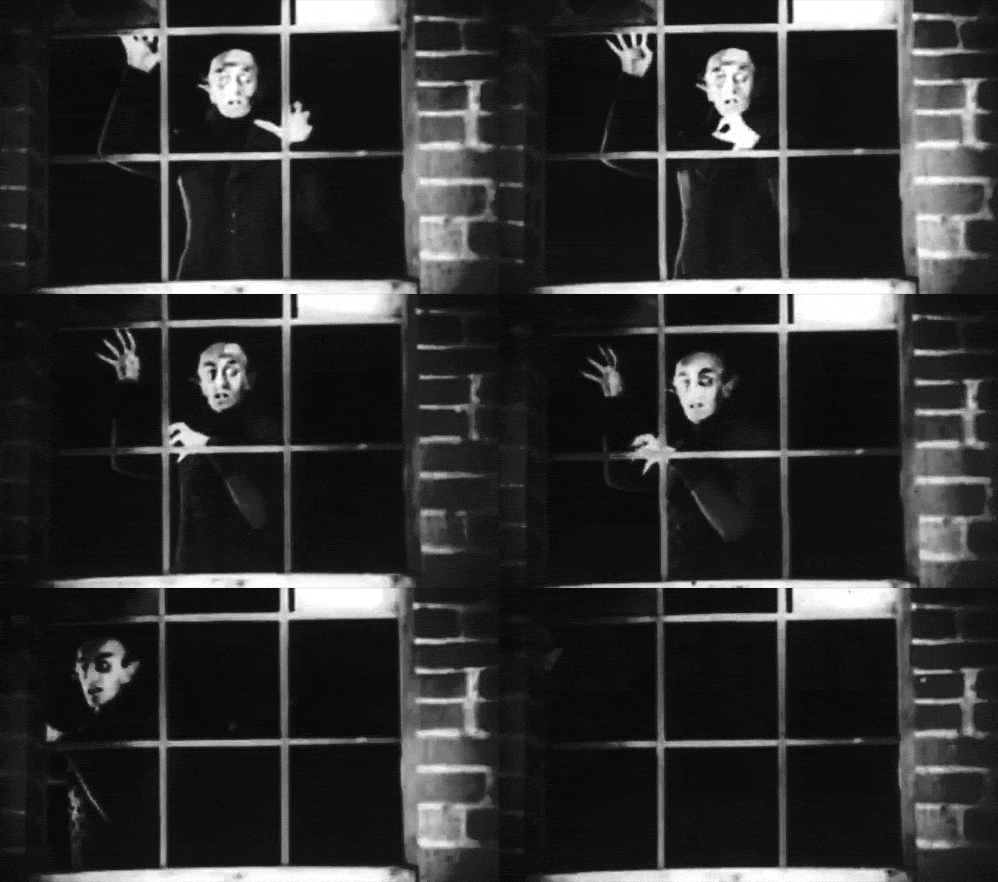
Vampires!
The story is actually a step up from the first two. It’s spooky and mysterious with several things going on. Pacing and suspense are good. Harry feels a lot more relatable. I really liked the new character Michael. As far as urban fantasy goes, this is one of the better ones.
***
Heartstone by Elle Katharine White
This book was described as Pride and Prejudice with dragons. I assume that’s correct, though I haven’t read Pride and Prejudice despite trying several times. It’s a world full of magical creatures but no actual magic itself.
At the beginning, Aliza meets a handsome, rude young man:
A broad-shouldered figure leapt from the dragon’s back.
“You there!”
Blast. He would be handsome.
This scene set off all kinds of warning bells in my mind that I was about to read a cliched romance.

Fortunately it ended up not being that bad. In fact, it’s a pretty decent story.
There are three distinct parts (acts). First, a group of dragonriders has arrived to take out a horde of gryphons terrorizing the countryside and responsible for the death of Aliza’s youngest sister. Aliza and her three surviving sisters are great characters and not at all annoying. Then that’s all taken care of, and it’s romance and misunderstandings and people running into each other by chance. Then the end has a big, dangerous creature showdown.
The writing is incredibly smooth but overly flowery; very good. My main complaint is I couldn’t keep all the characters straight. Sometimes they’d be called by their first names and sometimes their last names, even when we weren’t previously told what their other names were.
***

The famous Jonestown mass suicide happened in 1978. This was written around 1998. Nearly 40 years later, this event is still fascinating.
This accounts shows the pyschology of falling into a cult. There’s the flattery: help fight poverty and racism; we can’t do this without you; do something meaninful. Once in the trap, it’s nearly impossible to escape. Family relationships and friendships are torn apart; everybody is told to imform on everyone else for any infraction so there is no trust between members. Then there’s public shaming, beatings, sleep deprivation, other abuse, and the constant harangues of indocrination. It was really fascinating from a psychological standpoint.
Whenever something tragic happens, we blame the victims. (“She shouldn’t have gone there dressed like that; if only they’d passed that law like I told them.”) Sometimes victims are stupid and cause their own deaths. (You tried to shoot a cop? Not sorry they took you out first.) But a lot of times we’re just trying to rationalize how we could not also end up as victims in a similar situation.
The chapters when Debbie is trying to escape were so suspenseful! Just terrifying. Even knowing she was going to get away from the beginning, my palms were sweating through that whole sequence.
The details of the actual mass suicide are sparse since few survived. A journalist who was shot at by Jonestown soldiers gives his account in the prologue. Debbie’s brother was sentenced to life in prison for shooting (nonfatally) two people. She laments his harsh sentence. For the record, he was released in 2002.
Overall, a great accout of the history and inner workings of the Peoples Temple. I didn’t know much about it before.
***

First of all, don’t read the book blurb. It gives away a full two-thirds of the plot. Luckily I was half-way through before peeking at it. And don’t think about the title—it’s a very small part of the plot.
I have to rant a bit about the audiobook. The first two books were brilliantly narrated by Katie Lyons. She was perfect, and I’m sorry I took her for granted, and now she’s gone.
The new narrator is, well, unpleasant.

I feel the same way about Emily Bevan as Lucy feels about Holly. Part of it is that she tries too hard. When she’s just narrating, it’s fine. It’s the dialogue that’s really messed up. All the voices are drastically different and therefore come off as cartoony and unrealistic. Once lovable characters become obnoxious. I swear she’s pinching her nose closed for one character. Also, she uses a Welsh accent. Sometimes it’s so strong I can’t understand the words. But it puzzles me because these characters all live in London. I can buy mass hauntings but I can’t buy Londoners all speaking with Welsh accents. (I bet you thought because I’m American I wouldn’t notice.) I’m not trying to be anti-Welsh; it’s just very out of place.
I enjoyed the actual story. Anyone who likes ghost adventures should like it, and how did you get to book 3 if you haven’t liked the series so far? Lockwood & Co. go through several cases here. They are very busy since everyone else is swamped with an apocalyptic outbreak of hauntings in Chelsea. Eventually our heroes get to help in that case, too. The ending leaves a couple of cliffhangers.
The writing is excellent (assuming you can get past the narrator). It’s creative and suspenseful and grand fun. The skull in the jar is especially funny this time, sort of like Bartimaeus.
***

This was pretty good as a sequel: The world is expanded quite a bit, and we learn a lot more about the Rahuli people and the world around them, which they know nothing of. It’s a good book, not a great one. It took me a while to read simply because I wasn’t dying to know what happened next.
As the main character, Lhaurel doesn’t do very much. She’s very rarely proactive and not in many scenes. Gavin takes over as the main character, I guess. I like him. While the characters don’t feel quite fully developed, the dialogue is pretty good, along with character conflict.
The writing is adequate—competent, but not excellent. There are quite a few editing errors. My biggest pet peeve is the spelling “alright.” Aaaargh!! It makes me want to carry a protest sign everywhere that says “ALL RIGHT!”


No comments:
Post a Comment